
Friend or Foe? Societal Factors that Can Impact a Child’s View of Law Enforcement Officers By Dan Florent
Your child’s perception of law enforcement requires a partnership. At its basic level, it is an agreement between the officer and your child based on agency policies and your imparted personal values and insight. We live in a difficult time with environmental sources all competing for the interest of your child’s attention. Opinions and outlook are shaped through numerous mediums such as television, news media, social platforms, family, and friends. Caregivers bear the primary responsibility of shaping what type of person their child will become.
I recently had the opportunity to address a group of high school students visiting my law enforcement training center on a field trip. I asked the group, “Raise your hand if you have ever experienced a negative encounter with the police.” Out of the 22 students present, 14 raised their hands. I immediately thought 14 out of 22 was an exceptionally high ratio. The same amount raised their hands when asked about negative perceptions of law enforcement in general. What is going on? How is this happening? Can this adverse reaction point us toward an answer? Knowing that the teachers and chaperones were on a timetable and would likely balk at a more in-depth discussion without parental permission, I decided to conduct some research and attempt to ascertain a reason for this general negativity. I am not a research scientist, juvenile expert, psychologist, or social worker. I wanted to look at this phenomenon through the eyes of a police officer.
I was raised in a multi-generational law enforcement family. As a child, I would see my father, brother-in-law, uncles, and cousins in their uniforms, driving police cruisers almost every day. It was the family business for a very long time. It really wasn’t a big deal. It was simply what we did. When I became an adult, I entered the fold and also became a police officer.
In 1983, I remember my first day and my first motor vehicle traffic stop. As I approached the car, the driver said to me, “Good morning, sir”. The driver was 68 years old, I was 21. I had never been called “sir” in my life. That’s when I felt the weight of representing a profession and a community. This driver was just being courteous and respectful of the profession and uniform. I thought that it was likely how he was raised, or perhaps influenced by military or prior positive experiences with police officers. I quickly told my father, a World War II veteran) about the experience. He chuckled and reminded me that I was held to a high standard. He said, “People will see your uniform. What you do and say matters.” I carried that advice with me throughout my career.
Watching news footage of the beating of Rodney King in 1991 and the subsequent riots in Los Angeles caused my heart to sink. The ripple effects were felt worldwide. I saw and felt an immediate change in my local community. People were quieter, more reserved. A negative shift in the perception of police had occurred.
After the events of 9/11, perception rebounded and took a dramatic shift to the positive. Concerts for first responders, honor guards at sporting events and standing ovations were the norm. However, negative perception resurfaced following incidents such as the police shooting of Michael Brown in 2014 and the death of George Floyd in 2020. Public anger toward police often seemed to be perpetually stoked by social media, where attempts at defense could worsen and prolong the situation. How did these perceptions initially form?
A 2025 study done by Johns Hopkins University and the Bloomberg School of Public Health found that the largest percentage of youth reported learning about how to interact with police came from caregivers, followed by teachers.
If our perceptions of police are learned from our “nurture” environment, is police negativity a generational construct? Did adverse events involving law enforcement in the lives of our caregivers shape their attitudes, which were then passed onto their children? These responses from the field trip group seem to support this theory, but many other factors shape perception.
Numerous studies cite correlation between bias and race, culture, and socio-economic status. Negative interactions with police lead youth feeling helpless and dehumanized. These feelings are even more prevalent in communities of color. If police sentiment is cyclical, what tools are available to shift the curve? How can we change the environment to better coexist and support nurturing?
Police agencies must conduct a self-assessment. Developing a foundation of sound policies and procedures is the first step. This should be followed by training focused on juvenile engagement and appropriate interaction. Additional areas to strengthen include de-escalation training, community involvement, active listening, and patience with young people. School Resource Officers can be a fantastic way to bridge by providing not only law enforcement, but also education and mentorship.
These actions can help reshape agency culture, attitudes, and interactions, but requires the support of caregivers to succeed and endure for future generations.
As a parent, it can become increasingly difficult to discuss sensitive, high-profile news with your children. We live in a politically charged environment where the nightly news can polarize families and surface strong emotion. Social media can further perpetuate these emotions. Our children are exposed to videos of violent arrests, officer involved shootings, and police clashes with protestors. No form of media should replace a caregiver’s thoughtful, informed, and insightful conversation. You know your child better than anyone else.
My father was a wise man when he said, “What you do and say matters.” As a parent, this rings so true, though it can be challenging in today’s environment. Nurturing is inherently human behavior, but shaping perception requires intention. The caregiver plays a central role.
Be that caregiver who engages in constructive conversations. Encourage critical thinking. Discuss differing viewpoints and practice active listening.
Help build the partnership. Your child just may become a thoughtful adult who nurtures the next generation and promotes a positive balance in the perception of law enforcement. It’s never too late to start. ❦
 About the Author
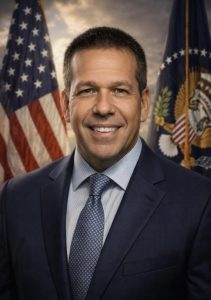
Daniel Florent is currently a Division Chief at Kiernan Group Holdings and has specialized in training worldwide organizations and educational institutions in Active Threat Mitigation, Workplace Violence Prevention, and the consequent execution of tabletop exercises. Active in training and investigations, he is also a research writer and author of numerous classified intelligence pieces.
Dan just passed 34 years in local, state and federal law enforcement and continues to strongly support New Hampshire’s police community. Dan holds a Master’s Degree from the United States Naval Postgraduate School and is a member and executive officer of numerous public safety benevolent organizations.


