
An Epidemic of Sleep Deprivation By LTC (ret) David Grossman
I believe that a “global epidemic of sleep deprivation” is the greatest challenge facing our children, our families, and our civilization today. As I will demonstrate here, this is an existential crisis, with sleep deprivation being a major factor in mental illness, traffic deaths, suicide, opiate overdoses, and obesity. These are among the major threats to and the leading killers of our children.
Two things must be understood up front. First, we must recognize that sleep is a “biological blind spot.” Throughout most of human history, every night without fail, it got dark, and there was not much to do. Some conversation, maybe other quiet activities, and then we slept.. Even in recent centuries, candles and lanterns were rare and precious. Then we invented electric lighting, television, and now a vast array of modern entertainment, all of which serve to “hit us in our blind spot.”
Our bodies compel us to seek air, water, and food. But they are not nearly as effective at ensuring we get enough sleep. Any 10-year-old at a slumber party can willingly go a day and a night without sleep. (They will not, however, be pleasant the next day!). It is virtually impossible to make that same child go as long without food. If there are interesting or exciting things to do, like playing video games, using social media, or binge-watching a worthyTV show, it is easy to choose that over sleep. . Our electronic media industries share a common objective: capture our attention! In doing so, they have fought tooth and nail to sell their products to minors and steal our children’s sleep!
The second is this: sleep deprivation impairs your mind and body in ways comparable to alcohol. A study by the US National Institute for Occupational Safety and Health (NIOSH) tells us that “Impairments due to sleep deprivation are similar to impairments due to alcohol intoxication!” This NIOSH report says, “Being awake for 24 hours is similar to having a BAC [blood alcohol concentration] of 0.10%.” The legal standard for drunk driving is 0.08. After 24 hours without sleep, your judgement is impaired at a level above legally drunk.
Mental Illness. Sleep deprivation is a major contributor to mental illness. For all practical purposes, sleep deprivation will make you mentally ill. After 24 hours without sleep cognitive and emotional impairment mirror intoxication. After two days without sleep, individuals are irrefutably demonstrating signs of mental illness: : aggressive, irrational, and often paranoid. (If it seems to you that the world is increasingly irrational and aggressive, you are right. This is because we are in the middle of a “global epidemic of sleep deprivation.”)
Any graduate of US Army Ranger School or SERE School will tell you, on the third day without sleep, you are psychotic: you will see things and hear things that are not there. In other words, sleep deprivation can cause an individual to have symptoms indistinguishable from schizophrenia. Yet many people, including young people, routinely approach or reach these thresholds through repeated all-night engagement with digital media.
Traffic Deaths. Sleep deprivation is a huge factor in traffic accidents, alongside alcohol impairment. Traffic deaths remain a leading cause of death among American teens – followed closely, possibly to soon be overtaken, by suicide and drug overdoses.)
Suicide. Sleep deprivation is a factor in suicide. I tell my audiences, “Right now, it is physically impossible for you to take your life. The drive to self-preservation is too powerful. But alcohol inhibits the drive to self-preservation! Alcohol is very often a factor in suicide: you have all these problems, you add alcohol, and suddenly it becomes possible to kill yourself. And sleep deprivation works the same way. Except that you are only drunk for a brief window, and children are not habitually drunk.
Some reserach suggests sleep deprivation is not only a key factor in suicide, but it is also the most remediable factors. While we can’t immediately fix someone’s relationship or financial stress, we can intervene to improve sleep.
Parents and teachers should continue to be deeply concerned about the possibility of suicide. I have lost a brother and two nephews to suicide, and it is one of the most devastating events a family can face. It is a growing, global threat, and one that demands practical, immediate intervention.
One such intervention that is straightforward: When you send your children to bed, remove access to electronic devices. cell phones away. No cell phones, no laptops, tablets or TVs. They must go to bed and sleep.
During a break in one of my presentations, a police officer shared his story. He had an ‘A’ student daughter who said, Dad, it’s embarrassing. You don’t have to take my cell phone every night. You can trust me.”
“So,” this officer said, “I trusted her. A little while later, my little girl took her life. And I never knew the hell she was living in until we read the text messages on her cell phone. She was enduring ceaseless, merciless, relentless bullying. And she stayed up every night, trying to defend herself. Trying to find someone who would stand up for her. My little girl was bullied to death in front of my eyes, and I let it happen.”
He said, “I can’t ignore that text message in the middle of the night. How in the world could I expect my little girl to ignore those text messages? The one thing on earth I could have done for her was to take her cell phone every night, to let her turn off all the bad stuff in this world and get a good night’s sleep.”
Opiate Overdoses. Sleep deprivation is also a key issue in chronic pain, which is a major factor in the opiate epidemic. Also, there may be cause to believe that if you are sleep deprived, the addictive impact of opiates is increased.
Fentanyl is an opiate responsible for 40,000 to 80,000 deaths a year in the US. It is a major form of an illegal opiate, and you can add to that all the problems and deaths involving prescription opiates. Year after year, more Americans are killed by fentanyl than in the entire 20 years of the Vietnam War. In 2024, for the first time, the number of fentanyl deaths dropped below the total of Vietnam, possibly because of the wide availability of opiate antidotes such as Narcan.
Obesity. Finally, as we examine the threats to the lives and health of our children, the research is overwhelming that sleep deprivation is a huge factor in obesity.
Sleep deprivation is also a major factor in Alzheimer’s and dementia (and that should scare the daylights out of everyone). Recent research also indicates that sleep deprivation shortens life expectancy, with only smoking having a greater negative impact on lifespan.
I tell all my audiences, “Do your own research.” Search online:
-Global epidemic of sleep deprivation
-Sleep deprivation + mental illness
-Sleep deprivation + traffic deaths
-Sleep deprivation + suicide
-Sleep deprivation + chronic pain
-Sleep deprivation + obesity
-Sleep deprivation + Alzheimer’s / dementia
-Sleep deprivation + heart disease
It is all there. It is absolutely undeniable, and every one of these health issues is exploding worldwide.
The New Factor, Worldwide. Now, think like a detective. Think like a scientist. What is the new factor, the common root cause worldwide, that is responsible for this explosion of suicides, traffic deaths, dementia, and all the other pathologies outlined above?
It is not “psychotropic drugs” because many of the nations with these health issues are relatively impoverished, and that is not a factor for them. (Not saying that this is absolutely not an issue, just that it is not the new factor worldwide.) It is not guns, because many nations with the strictest and most successful gun laws are seeing this tragic epidemic of issues mentioned above. It is not poverty, because many wealthy nations have seen this explosion of health maladies.
No.
The problems outlined here are largely due to one new ingredient worldwide: video games, social media, cell phones/texting, streaming movies and videos, and FOMO (fear of missing out). All this technology is intentionally and systematically designed to be as irresistible, compelling, attractive, desirable, and addictive as humanly possible – and thus, to steal our sleep. (The head of Netflix has stated, “Our competitor is sleep.” Search that online; it will come right up.) These industries will never willingly tell you about the harmful impact of their products on you or your children.
Much of the medical research on this subject uses the term “insufficient sleep syndrome” (ISS). An NIH study, entitled “Insufficient Sleep Syndrome: Is it time to classify it as a major noncommunicable disease?” tells us that “insufficient sleep has been linked to seven of the fifteen leading causes of death.”
Additionally, current evidence suggests that sleep plays a significant role in determining cognitive performance and workplace productivity. This study concludes that, “Sleep insufficiency has been declared to be a ‘public health epidemic’; therefore, we propose ISS as a potential noncommunicable disease.”
Imagine our entire civilization, in which large portions of our citizens are chronically sleep-deprived. Employees, bosses, students, teachers, and first responders are all staggering out the door, interacting with others, making critical decisions, while chronically sleep-deprived. Most especially and most tragically, are parents and their children.
Around the world, every time one person interacts with another, there is a “friction point” adding up to billions and trillions of friction points every day. Think of our civilization like a huge engine. An amazing array of social, physical, psychological, and physiological factors provides lubricant for each of these friction points, allowing this engine to continue chugging along and provide a healthy and prosperous world.
Sleep deprivation is like a bucket full of sand dumped into that engine, increasing the “friction” at… Every. Single. One of these billions of daily contact points. A civilization of chronically sleep-deprived people is doomed to despair, disintegration, and destruction.
Post Tramatic Stress Disorder (PTSD), Depression & Suicide. As I train military and first responders across the US, I tell them about a National Institute of Health report on “The Association of Sleep Duration, Mental Health, and Health Risk Behaviors among US Afghanistan/Iraq Era Veterans” tells us that “Poor sleep quality was dramatically associated with PTSD (five times the rate), MDD [major depressive disorder] (nine times the rate), and suicidal ideation (almost six times the rate), and is consistent with other disorders.” This is not a causal relationship. It is not even a correlational relationship. It is a toxic, interactive relationship and the one place where we can interrupt this toxic cycle is sleep.
Then I tell my audiences:
If someone came to work drunk, you would fire them. We must understand that coming to work sleep deprived is… Just. Like. Being. Drunk!
If you’re drunk, you will “sober up” fairly quickly, but if you are sleep-deprived, it just gets worse and worse.
If you come to work and say, “I played the new video game all night! It was awesome!” That. Is. Not. Acceptable!
If you have a sick baby and you stayed up all night? Hey, we got you covered.
You played stinking games or binge-watched shows all night? That is not acceptable.
Right about now, a lot of you are looking at me like a deer in the headlights, saying, “Dude! You got my number!” And that’s okay.
You didn’t know. But now you know, and you know I’m right! We can’t keep doing business like that.
I believe this is the single most important aspect of the harm caused by modern technology. It is the single greatest challenge to the survival of our world today.
A Better Team and a Better Life. The coach of a major athletic team (he asked me to never say who) told me that sleep management was his “secret weapon.” The US Air Force is using the “Oura Ring” sleep-tracking device to monitor its pilots’ sleep. “You’re flying a quarter-of-a-billion-dollar aircraft tomorrow. Be sure you get a good night’s sleep tonight!”
All of our armed forces have established “crew rest” requirements for pilots and flight crew, but they have never been able to tell whether that time is actually being used to sleep, to play video games or watch shows. Now they can truly make their pilots get that sleep. Similarly, this coach told me he uses the Oura Ring to ensure sleep discipline among his team. He told me, “I don’t know how many coaches out there are doing this. But if my team plays against a team that doesn’t enforce sleep discipline, I will kick their butts every time.” (The coach also told me that every year his players will have one guy wear ten rings and go to bed, while his buddies go party. But, the coach said, “We figure that one out real fast!”)
You, your family, and your children can all have a better team and a better life if you address sleep deprivation and improve sleep hygiene.
To Save a Child’s Life. I speak at many school safety conferences. I always tell them:
We will talk about protecting your school from violence. But odds are your school hasn’t had any murders. Unfortunately, I bet you’ve had problems with mental illness. And you’ve probably had suicides, traffic deaths, drug overdoses, and obesity. The solution is to educate our kids about sleep hygiene from their youngest ages.
People say. “We need to do something about mental illness!” Sleep! “We need to do something about suicides!” Sleep! Or “opiate overdoses!” Sleep! Or “traffic deaths!” Sleep!
When my second-grade teacher told us that cigarettes kill people, I went home and hid my dad’s cigarettes. Teachers can tell their students how much sleep they need at their age (and how to calculate that on a clock), that they need to sleep in complete darkness (or with a sleep mask), and that they need to cut off caffeine after lunch. There are many other important aspects of sleep, but just these three things can be a revolution in wellness.
I told this audience of school safety specialists, “If you want to walk out that door and save a child’s life, sleep is the place to begin.”
How Much Sleep? First, I gave them the information from the American Academy of Sleep Medicine on how much sleep we need:
-Babies (4 to 12 months) -12 to 16 hours (incl naps)
-Toddlers (12 to 24 months) -11 to 14 hours (incl naps)
-Preschool (3 to 5 years) -10 to 13 hours (may include a nap)
-School Age (6 to 12 years) -9 to 12 hours
-Teens (13 to 18 years) -8 to 10 hours
-Adults -at least 7 hours
(This can actually be a good chance to teach kids, using math to set a bedtime. Start with wakeup time and count backwards to determine “bedtime.” This really is something teachers can teach. Because the one thing teachers can do is teach!)
Sleep in the Dark. Next, teach children to sleep in total darkness, or at least as dark as possible. In one sleep lab study, with a totally dark room, the bathroom light on, and the door shut, the light coming through the crack in the bathroom door was enough to prevent individuals from getting quality sleep. Learning to sleep with a sleep mask is one of the best life skills that anyone can develop, and it is best to do that while we are young.
Cut Off Caffeine After Lunch. Finally, we must teach our children to stop consuming caffeine shortly after lunch. The global abuse of caffeine is another subject entirely, but shutting down after lunch can dodge the majority of the problems associated with this powerful and addictive drug.
There is so much more involved with healthy sleep, and I encourage everyone to study this subject. But for now, these three “life hacks” can make a huge difference and raise a generation of healthy children. And if we raise a generation of healthy children, that will lead the way to a truly better world. ❦
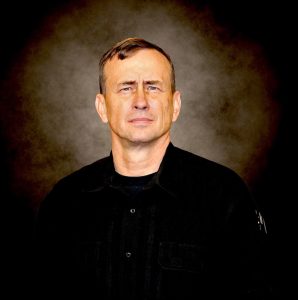 About the Author
Lt. Col. Dave Grossman is an award-winning author and nationally recognized as a powerful, dynamic speaker. He has authored sixteen books, including his “perennial bestsellers” On Killing, On Combat, and On Spiritual Combat; a New York Times bestseller co-authored with Glenn Beck; and many other successful books and scholarly papers. His books are “required” or “recommended” reading in all four branches of the US Armed Forces, and in federal and local law enforcement academies nationwide.
His most recent book, On Hunting: The Definitive Study of the Mind, Body, and Ecology of the Hunter in the Modern World, has already established itself as the authoritative resource in this field.
Col. Grossman is a US Army Ranger, a paratrooper, a prior service sergeant, and a former West Point Psychology Professor. He has five patents to his name, has earned a Black Belt in Hojutsu (the martial art of the firearm), and has been inducted into the USA Martial Arts Hall of Fame.
His research was cited by the President of the United States in a national address; he has testified before the U.S. Senate, the U.S. Congress, and numerous state legislatures; and he has been invited to the White House on two occasions to brief the President and the Vice President in his areas of expertise.
In recent years, Col. Grossman’s work has focused on the “global epidemic of sleep deprivation” and the tragic role of sleep deprivation in suicide, traffic deaths, and PTSD. He has been called upon, on many occasions, to present “psychiatric grand rounds” on PTSD and combat trauma, and he presented Department of Defense-wide (DoD-wide) psychiatric grand rounds, simulcast to over 100 locations worldwide.
Since his retirement from the US Army in 1997, he has been on the road for over 200 days a year for over 26 years, serving as one of our nation’s leading trainers for military, law enforcement, mental health providers, and school safety organizations. He was inducted as a “Life Diplomate” by the American Board for Certification in Homeland Security and a “Life Member” of the American College of Forensic Examiners Institute.


