Prepared Through Play Why Real-World Challenge beats Virtual Victories By Mark Toorock
Swipes vs. Strides. A child swipes through 99 levels of a mobile game. There are puzzles, timing challenges, dopamine dings, and shiny “rewards” – colorful coins and gems every few seconds. Without too much stretch, you could compare the cacophony to the sound of the slot machine area of a casino. It’s fun, engaging, and even difficult at times. The child is locked in, but what are they actually earning?
Meanwhile, another child approaches an angled, downed tree trunk. She tries to vault over it, but stumbles, not making it all the way over. On the next try, she almost makes it, getting fully on top of the log, but not clearing it completely. On the third try, she succeeds – clearing the log and landing in a choppy, staccato jog. She tries again, this time it’s smooth, almost graceful. She’s engaged, committed.
This is serious play; it’s difficult, but the feedback is immediate, tactile, and unmistakable – she knows instantly what’s working and what isn’t. Because the tree trunk is angled, she self-selects a difficulty that gives her “just enough” success to keep pulling her further into the challenge. An hour passes as she tries different footing combinations, varied heights, and approach angles. Is it the leg of a fallen giant? The tail of a gold-hoarding dragon?
While she flies through the air, time flies as well, and the light fades to dusk. She’s hardly noticed as she’s in a self-induced flow state: the perfect level of challenge for growth and adaptation. She wipes the sweat from her brow and decides that for today, the dragon is defeated.
This is what the video games try so hard to emulate, and while they have the “dopamine drip” dialed in, the success is never real; there’s just another level to swipe through. For the girl in the woods, there is something gained, something earned; the confidence is tangible, and it carries over to other challenges in life. She has become more resilient.
Real-World Problem-Solving is Fading.
Kids today are growing up with less confidence and more anxiety; they are not inherently weaker or more frail, but they are getting fewer opportunities to test themselves in real-world environments.
“We say we want kids to learn risk management, but we protect them and make decisions for them – depriving them of both the ‘risk’ and the ‘management.’” – Mark Toorock.
When a child engages in physical problem solving, like climbing a tree, planning a route to jump across rocks in a stream, or climbing a rock wall, they’re not just moving and doing physical activity. They are actually making assessments and solving for variables, including risk vs reward, assessing their own capabilities, and processing a staggering amount of data: texture, grip, momentum, structural integrity, balance, coordination, timing, and the list goes on.
This kind of problem-solving builds adaptive expertise- the ability to flexibly apply knowledge and skills to novel challenges. According to an article in Frontiers in Psychology, “physical activity promotes the improvement of cognitive benefits such as attention, memory, thinking, and executive function”.
The article goes on to say that “moderate physical activity lasting at least 3 days a week, at least 60 min a day are most conducive to improving the brain function of children and adolescents.”
Screen Games offer challenge and stimulation, but it’s all behind a piece of glass. Unlike real life, the risks are simulated, and the rewards are virtual. There’s no grit, no true adaptation. Real life, in contrast, is visceral and full of variables, real consequences, and no “undo” button. Progress is rarely linear, and almost always consists of failed attempts, iterations, and adaptations to changing circumstances.
“What we earn through trial and error is indelible. It cannot be given, and it cannot be taken; it becomes part of our very fabric” – Mark Toorock.
Compliance Vs Ownership
Being told what to do sets a child into “compliance mode”. This often results in a minimum effort scenario, just enough to “get you off their back”.
Instead, we want to activate “ownership mode.” Once a child accepts a challenge as their own, they strive to do their best, not just complete the task, but to improve themselves and the outcome. The shift from extrinsic to intrinsic motivation gives them agency to own both the outcome and the process. But that only happens when they have room to try, fail, adapt, and even succeed in a different way—not just chase one single, rote objective.
Many adults will recognize this same dynamic in their own lives. When we’re handed a task with no stake in it, the goal is only to “get it done”. However, when we care about the outcome- because we have a role and determination in the project- we bring our best ideas and energy. Kids are no different; they just live in a world where most of their time is spent doing “what they’re told” or “what they have to”. Let’s raise engaged kids by giving them ownership of the challenge or project, the opportunity to learn and contribute their best, and the freedom to find their own way through it.
Exploratory Play: The Engine of Readiness.
“The exploratory mindset creates engaging environments, inspiring kids to challenge themselves, experiment, and push their own limits through movement and self-discovery.”
The best kind of play isn’t just chaotic or unstructured; it’s exploratory. It has purpose, challenge, and room for discovery.
A. Curiosity-Driven Design.
Kids engage deeply when they’re solving, not just following.
Instead of giving them instructions, give them invitations. These challenges spark intrinsic motivation, creative problem-solving, and ownership of success.
B. Structured Freedom.
A good play environment offers boundaries, not answers.
For younger children, define their play space, but let them figure out how to move through it. For older children, set safety guidelines and neighborhood boundaries, but make them as broad as possible. Allow your child the opportunity to earn your trust. Otherwise, they are “just doing as they’re told” and won’t develop decision-making skills needed to navigate the real world.
It’s tempting to set tight guardrails, but too much safety deprives kids of the chance to learn how to recover.
“True readiness doesn’t come from always getting it right; it comes from trying again after it goes wrong.”
C. Markers of Progress.
Growth is most powerful when kids can see it themselves.
Offer repeatable challenges with early success and increasing difficulty: balance lines, jumps, crawling paths, and help them assess and reflect on their progress.
Trust is developed when we encourage effort, but don’t reward failure. When a child knows they haven’t succeeded and still hears you say “good job,” your feedback loses value. Instead, give specific actionable feedback:
“Try again, and this time remember to…”
“You almost made it, I think you’ve got it next time if you …”.
This integrity develops and maintains their trust in you as a guide and coach.
These moments create an environment that builds confidence rooted in action, effort, and outcome- not praise. They teach kids how to track their progress and take pride in it.
Compliments are extrinsic. Confidence from success is intrinsic.
Remember, your reactions teach them how to react. If you’re nervous, anxious, or overprotective, they will absorb that. But if you can allow yourself to become more “hands off,” they will act with the responsibility you’ve given them, making their own discoveries and judgments, not just mimicking yours.
What This Kind of Play Builds.
Exploratory play builds more than strong bodies; it builds resilient minds. It teaches kids to:
– Assess and manage risk
– Problem-solve with incomplete information
– Adapt when plans fail
– Recover from mistakes
– Stay calm under pressure
These are the foundations of real-world competence , skills needed not just in emergency situations, but in daily life.
Two Hidden Superpowers Built Through Play.
Anti-Fragility: Kids don’t get tougher by being protected. They grow through struggle and recovery.
“Kids can’t become resilient if they’re never allowed to face resistance. Too much cushioning keeps them comfortable,but it also keeps them untested. They will be unsure of themselves when it comes to decisive actions.”Letting kids fall (safely), fail (repeatedly), and find their own way through builds strength from the inside out.
Executive Function: When kids play with purpose, they’re also building high-level thinking skills:
– Planning movement sequences
– Testing solutions and adapting in real-time
– Setting goals and adjusting strategies
Play like this rewires their brain to think more clearly and act more decisively, now and later. These are the same cognitive tools they’ll use in school, relationships, and work.
What Adults Can Do – The Growth is in the Gap.
Your role isn’t to control the play, it’s to open the space for it.
The most potent and impactful growth happens not at the edges of instruction, but just beyond. This is The Gap – the moment when kids step into uncertainty, attempt something new, develop creativity, and discover what they are capable of.
This doesn’t mean letting go or sending them off to fight wolves in the forest unarmed. It means setting clear boundaries that are wide enough to allow for growth, and then stepping back far enough to let the learning unfold.
Try inviting challenges that allow for multiple paths to success:
On the playground- “ Can you get from the slide to the swing without touching the ground?” or “Make a loop where you climb on three different things, then try it in reverse.”
At the beach – “Can you make a sandcastle with a moat with water in it?” In the snow: “Make a path around three trees without crossing your own footsteps.”
Try to create challenges that set a boundary, offer a goal, allow for multiple solutions, encourage creativity, ownership of the process, and adaptive thinking.
“When I coach coaches, the most common thing I teach is not to over-correct. Allow the child to try several times before giving input, and then, only give the minimum necessary to point them in the right direction and earn the solution themselves.” -Mark Toorock
Be close enough to observe, and far enough to let them try. If it doesn’t feel like they did it “on their own,” then the growth isn’t theirs.
Swap “Be careful” for “Be aware.”
Swap “Let me help you” for “Try your way first.”
The best growth doesn’t come from being told what to do; it comes from figuring out what works.
Closing Reflection.
Preparedness doesn’t come from perfection; it comes from exposure and experience. It’s earned through movement, through mistakes, through doing. Protection is not preparation. The best safety net is experience, the kind built through falls, resets, and real triumphs.
Let’s raise kids who don’t just scroll through challenges and tick boxes, but instead face challenges with enthusiasm and strive for excellence.
The best preparation isn’t perfect practice — it’s discovering what works through action, experimentation, and ownership. Your calm presence, your trust, and your willingness to let them explore are some of the most powerful tools in their development. ❦
 About the Author
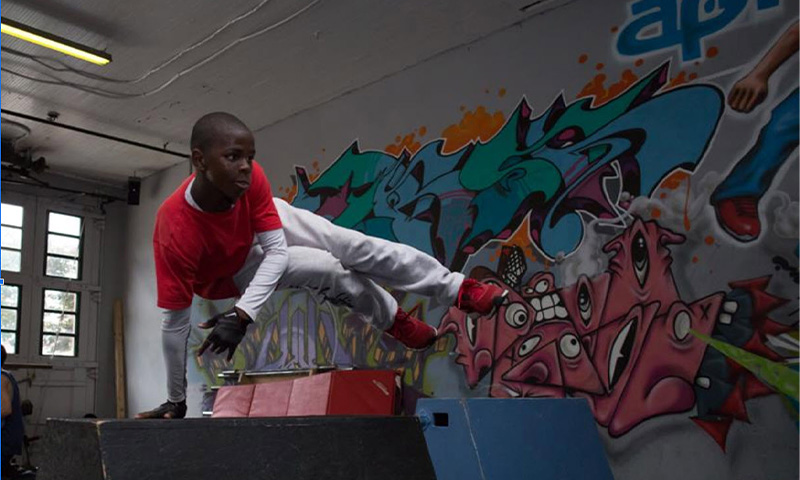
Mark Toorock is the founder of American Parkour. His programs are now taught in every Washington, DC middle school, where over 40,000 kids have done parkour as part of their physical education classes. Currently, APK’s programs are expanding into several states across the country. American Parkour also makes parkour equipment for home use.
Mark has had over 40 jobs, from professional concert lighting to technology management for an investment bank. He has held certifications in Martial Arts, CrossFit, MovNat, Mobility, and Parkour. Mark has produced two parkour-based television shows and does public speaking for corporate and technology events.


